

Model comparison
Tesla Model Y vs Toyota RAV4
48% vs 83% estimated value retained after five years
See the comparisonExpect a Tesla Model Y to give up around 51.6% of its value across five years, which makes it a faster-than-average depreciator. Buying a 2022 model instead of new saves roughly $39,692 off the original sticker.
Compare With
Open a side-by-side comparison of five-year value retention, depreciation by model year, used asking prices, repair costs, MPG and safety data.
Model comparison
48% vs 83% estimated value retained after five years
See the comparison
Model comparison
72% vs 48% estimated value retained after five years
See the comparison
Model comparison
73% vs 48% estimated value retained after five years
See the comparisonAt a glance
After 1 year
16.7%
typical loss
After 3 years
36.5%
typical loss
After 5 years
51.6%
typical loss
Biggest drop
2023→2022
+21.0% in one year
Smart-buy year
2022
~$30,298 median
Accident-reported
19.0%
of listings
| Model year | Depreciation from MSRP |
|---|---|
| 2026 | 0.2% |
| 2025 | 15.5% |
| 2024 | 22.4% |
| 2023 | 33.9% |
| 2022 | 54.9% |
| 2021 | 53.3% |
| 2020 | 52.3% |
Based on 1,284 real used-car listings. Each listing's price is adjusted to a standard 12,000 mi/year for its age and compared to the vehicle's original MSRP; figures reflect a 5% asking-to-sale estimate.
Estimated value of a typical Tesla Model Y as it ages, from a ~$44,990 new price.
| Age | Retained | Est. value | Lost that year | Total lost |
|---|---|---|---|---|
| 1 yr | 83% | $37,467 | −$7,523 | −$7,523 |
| 2 yrs | 73% | $32,717 | −$4,750 | −$12,273 |
| 3 yrs | 64% | $28,570 | −$4,147 | −$16,420 |
| 4 yrs | 56% | $24,948 | −$3,622 | −$20,042 |
| 5 yrs | 48% | $21,785 | −$3,163 | −$23,205 |
| 6 yrs | 42% | $19,024 | −$2,761 | −$25,966 |
| 7 yrs | 37% | $16,612 | −$2,412 | −$28,378 |
| 8 yrs | 32% | $14,506 | −$2,106 | −$30,484 |
Interactive tool
Estimate a used Model Y's value from its year and mileage, using our depreciation model.
$24,950
about typical mileage
At 48,000 miles (about typical for a 4-year-old car, ~48,000 mi). Estimate only — actual value depends on condition, trim, options, and local demand.
Cost of ownership
The two biggest costs — depreciation and energy — over five years for a recent model bought new (~$44,990).
Energy cost from the EPA (electricity). Maintenance, insurance, taxes, and financing are additional and vary by driver and location.
Thinking about a Tesla Model Y? It's a genuine bargain on the used market thanks to fast depreciation. The smartest pick is a 2022 (around $30,298) — it sits just past the steepest depreciation, so the first owner already absorbed the biggest loss. Favor the Premium trim for the best resale, and always pull a vehicle-history report before buying. Whatever you do, don't buy this one new — let someone else take the first-year hit.
The 2023-to-2022 transition is where the Model Y bleeds the most value, dropping 21.0% points in one year. That makes the 2022 Model Y a value sweet spot — the previous owner absorbs the worst of the drop, and you still get a relatively recent car.
Because the Tesla Model Y is electric, its value is shaped by more than age. The federal used-EV tax credit (up to $4,000 on qualifying sales under $25,000) supports the lower end of the market, while battery health, remaining range, and fast-charging capability increasingly decide what buyers will pay. EVs in this class have also depreciated faster than comparable gas cars as new-model prices fell and technology improved — which is precisely why used examples are such a relative bargain.
Not all trims age alike — the Premium retains the most value (~5.4% depreciation) and the Performance the least (~46.0%), a gap worth thousands when you resell.
Across 1,691 listings in 26 states, 19.0% of listed examples report a prior accident, 50.0% are one-owner cars, averaging 1.7 owners.
Share of original MSRP retained, averaged across model years.
Across 1,691 Tesla Model Y listings.
Accident-free
81%
One-owner
50%
Avg owners
1.7
Personal use
86.2%
Mileage profile across 1,691 listings.
Over 100k mi
7.2%
Over 150k mi
0.4%
Highest mileage
185,152 mi
Price at 120k+ mi
$21,198
Roughly 7.2% of listed Tesla Model Ys have already crossed 100,000 miles — most on the market are still relatively low-mileage.
The 2022 Tesla Model Y sits just past the steepest depreciation drop, with a typical asking price around $30,298 — about $39,692 off its original MSRP.
View 2022 details →A sample of real listings behind the figures above.

$51,385
2026 Premium · Silver
139 mi · Roswell, GA
View listing →
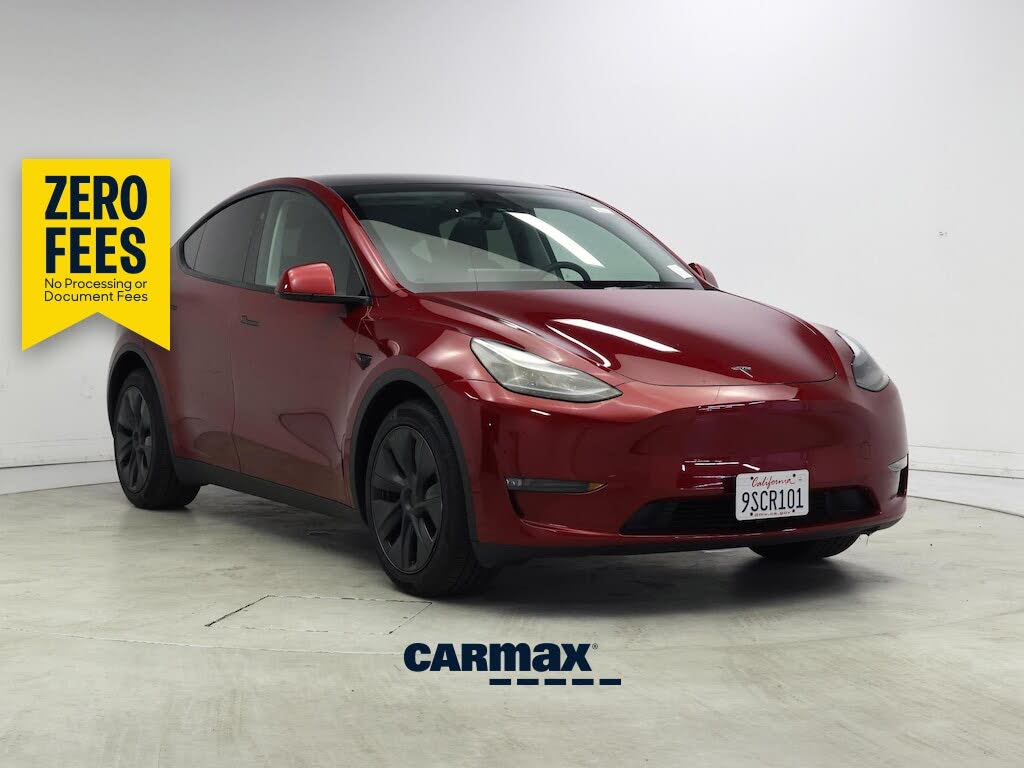
$44,998
2025 Long Range · Red
3,191 mi · Murrieta, CA
View listing →

$43,590
2024 Long Range · Blue
4,143 mi
View listing →
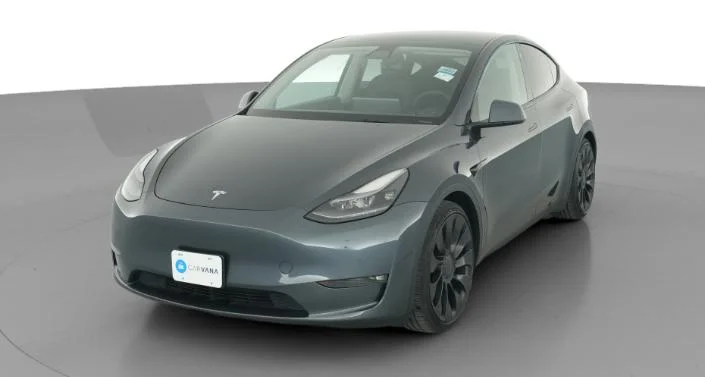
$32,590
2022 Performance · Gray
32,779 mi · Kansas City, MO
View listing →
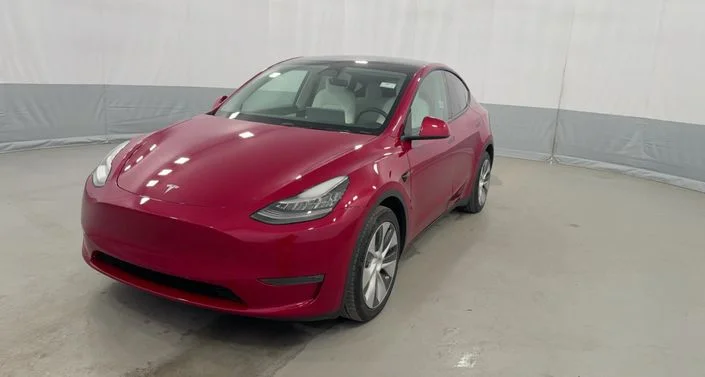
$30,990
2021 Long Range · Red
27,017 mi · Cleveland, OH
View listing →

$28,990
2020 Long Range · Gray
44,771 mi · Dallas, TX
View listing →
Live dealer listings, refreshed periodically. Prices and availability change.
A Tesla Model Y loses about 51.6% of its original value over five years, based on a mileage-adjusted analysis of real used-car listings. The drop is gradual at first — about 16.7% after one year and 36.5% after three — then keeps compounding with age and mileage. For example, a 2021 Model Y that cost about $57,990 new listed for roughly $27,721 in the analyzed cohort. Your exact figure depends on trim, mileage, condition, and local demand, but the five-year mark is where most of the early depreciation has already happened — which is what makes lightly-used examples such good value.
The 2022 Model Y is the value sweet spot: it sits just past the model's steepest one-year depreciation drop, so the first owner has already absorbed the biggest loss. Expect to pay around $30,298 for a typical example, and the Premium trim will hold its value best from there. As always, a well-maintained, accident-free example with average mileage for its age is worth paying a little more for than a cheap car with a questionable history. Whatever year you settle on, budget for a pre-purchase inspection — at a couple hundred dollars, it's the cheapest insurance against an expensive surprise down the road.
The Premium retains the most value, depreciating about 5.4% on average across model years in our data. Trim choice can swing resale by thousands of dollars over a few years, because desirable trims stay in demand on the used market while stripped-down or niche trims sell at a discount. It's also worth comparing the trim premium new versus used — a pricier trim sometimes depreciates enough to become the smarter used buy. If you expect to resell, the Premium is the safer bet; if you're keeping the car long-term, buy the trim with the features you actually want and worry less about resale.
Electric vehicles in this class depreciate faster than comparable gas cars for a few reasons: new-model prices have fallen as production scaled, battery and charging technology keeps improving (making older EVs feel dated), and buyers price in long-term battery health. The Tesla Model Y sheds roughly 16.7% in its first year alone. The upside is entirely on the buyer's side — a one- to three-year-old example can cost far less than new while remaining perfectly capable. Just verify the battery's state of health and remaining warranty before purchase.
About 19.0% of listed Model Ys report a prior accident, while 50.0% are one-owner vehicles averaging 1.7 owners. A reported accident isn't automatically disqualifying — severity matters far more than the fact of a claim. Minor cosmetic or fender-bender claims affect value much less than structural damage or airbag deployment, so read the detail in the history report rather than just the count. Either way it should be reflected in the price; always pull a full vehicle-history report, and prefer a clean, one-owner car when the price difference is small.
Depreciation is computed from 1,284 real used-car listings. Each listing's asking price is normalized to a standard 12,000 miles per year for the vehicle's age, adjusted by a 5% asking-to-sale estimate, and compared against the original base MSRP for that VIN's trim. Headline 1/3/5-year figures reflect a smoothed retention curve fitted across all model years (the typical trajectory); individual years in the table above can run above or below it with market conditions. Full methodology. Updated August 2026.