

Model comparison
Honda CR-V vs Toyota RAV4
73% vs 83% estimated value retained after five years
See the comparisonThe Honda CR-V market is divided by two redesigns and a changing powertrain mix. The 2015-2016 cars close the fourth generation, 2017-2022 is the turbo-era fifth generation, and 2023 onward uses a larger sixth-generation structure with gas and hybrid trims occupying different parts of the lineup. Across 2,620 listings, our fitted curve estimates 26.7% depreciation after five years. The right CR-V is defined by generation, trim, powertrain, and condition rather than the model badge alone.
Compare With
Open a side-by-side comparison of five-year value retention, depreciation by model year, used asking prices, repair costs, MPG and safety data.
Model comparison
73% vs 83% estimated value retained after five years
See the comparison
Model comparison
73% vs 57% estimated value retained after five years
See the comparison
Model comparison
73% vs 72% estimated value retained after five years
See the comparison| Model year | Depreciation from MSRP |
|---|---|
| 2026 | 4.5% |
| 2025 | 7.7% |
| 2024 | 11.3% |
| 2023 | 17.4% |
| 2022 | 19.8% |
| 2021 | 20.7% |
| 2020 | 26.9% |
| 2019 | 32.7% |
| 2018 | 39.0% |
| 2017 | 44.3% |
| 2016 | 49.3% |
| 2015 | 53.0% |
Based on 1,907 real used-car listings. Each listing's price is adjusted to a standard 12,000 mi/year for its age and compared to the vehicle's original MSRP; figures reflect a 5% asking-to-sale estimate.
The buying decision
Our best all-around pick is the 2025 CR-V. It currently asks $827 more than 2024 while averaging about 9,828 fewer miles, an unusual combination that favors the newer year in this snapshot. For a lower fifth-generation budget, the 2019 costs only $2,022 more than 2018 and carries about 13,473 fewer average miles. Both signals still require a like-for-like trim and powertrain comparison.
Best under $20k
Target trim: LX
Model-year sample across all trims.
The 2015 LX is the least expensive CR-V year in the current catalog and provides a straightforward fourth-generation baseline. It makes the most sense for buyers who prioritize purchase price and documented care over newer turbo powertrains, connectivity, and driver-assistance equipment.
Tradeoff: This is an older-car purchase. Budget for inspection findings and near-term wear items, and verify installed safety equipment instead of assuming every 2015 has the same options.
Best fifth-gen value
Target trim: EX or EX-L
Model-year sample across all trims.
The 2019 sits inside the 2017-2022 generation and currently asks $2,022 more than 2018 while averaging about 13,473 fewer miles. EX is the equipment baseline to price first; move to EX-L only when the actual feature premium makes sense.
Tradeoff: The year-level median blends trims, drivetrains, and histories. A cleaner 2018 can still beat a poorly represented 2019, so compare the total transaction and inspection results.
Best near-new
Target trim: EX, EX-L, or Sport Hybrid
Model-year sample across all trims.
The 2025 offers the strongest near-new step in our data: its median ask is $827 more than 2024 and average mileage is roughly 9,828 miles lower. Choose the gas or hybrid path first, then compare trims within that powertrain.
Tradeoff: A blended all-trim median is not a quote for a Sport Hybrid or EX-L. Compare exact equipment, drivetrain, warranty start date, fees, and any new-car financing alternative.
Generation context
CR-V trim names repeat, but the vehicle, available powertrains, and technology baseline change at each generation boundary.
2015-2016
Fourth-gen closeout
Median asking prices run from $14,681 to $15,993, with average mileage spanning 114,989 to 120,480 miles.
These are the oldest CR-Vs in the current dataset and the final years before the 2017 redesign. They are attractive for acquisition cost, but age-related condition now dominates. Compare service records, tires, brakes, fluids, rust exposure, and collision repair before paying for a one-year difference.
Honda: CR-V generation history and 30th anniversary2017-2022
Fifth generation
Median asking prices run from $18,180 to $26,988, with average mileage spanning 60,429 to 106,779 miles.
Honda redesigned the CR-V for 2017, introduced its first turbocharged engine option, expanded cabin space, and made Honda Sensing standard on EX and higher trims. This era offers the broadest used selection, but LX, EX, EX-L, Touring, gas, hybrid, and drivetrain differences must be matched before comparing prices.
Honda: all-new fifth-generation 2017 CR-V2023-present
Sixth generation
Median asking prices run from $29,645 to $35,140, with average mileage spanning 592 to 39,871 miles.
The sixth generation enlarges the cabin and places the two-motor hybrid system in the upper Sport side of the U.S. lineup. Gas EX and EX-L listings therefore occupy a different equipment and price band from Sport Hybrid models. Treat powertrain choice as the first branch of the buying decision.
Honda: CR-V generation history and 30th anniversarySame-horizon comparison
These are five-year fitted depreciation curves from one listing pipeline. Holding the horizon constant is more useful than averaging every model year, but it cannot replace a vehicle-level transaction comparison.
The CR-V sits between its two core rivals in our curves. It gives up 9.8 percentage points to the RAV4 while retaining 15.9 points more than the Rogue. Those differences matter over time, but a purchase-price premium, financing rate, or inspection finding can be larger. Buy the best complete deal, not the badge with the smallest modeled percentage.
Retains about 83.1% after five years
Retains about 73.3% after five years
Retains about 57.4% after five years
Curves use mileage-adjusted listing prices and a common asking-to-sale estimate. Fuel, insurance, maintenance, taxes, and incentives are outside the model.
Configuration strategy
The same CR-V year can contain materially different gas, hybrid, front-drive, all-wheel-drive, and equipment combinations.
LX
LX can be the lowest-cost route, but its equipment differs by generation. Confirm the year-specific safety and convenience features instead of using the badge as a fixed specification.
EX / EX-L
These trims dominate the current sample. Compare leather, convenience, and driver-assistance equipment in dollars, then favor the cleaner history when two listings are close.
Sport Hybrid
Estimate fuel savings from your annual mileage and local prices, then compare with a same-year gas CR-V. Newer hybrid inventory makes a cross-year retention average unreliable.
Touring / AWD
Upper trims and all-wheel drive can make sense for the right use case. Confirm original equipment, wheel and tire costs, and actual condition rather than assuming the premium is automatically recovered later.
Before you commit
A listing title identifies the search result. The VIN, powertrain, records, and inspection identify the vehicle you would actually own.
Decode the VIN and original equipment. The rare CR-V e:FCEV is a fuel-cell plug-in vehicle with a very different fueling use case and should not be compared with ordinary gas or hybrid inventory.
Use NHTSA or Honda's VIN tool to verify applicability and remedy status. A model-year count alone does not establish the status of the CR-V in front of you.
Driver-assistance cameras and sensors may require calibration after glass or body work. Ask for documentation and have warning lights and system operation checked.
Check matched tires and tread depth, fluid service history, suspension wear, leaks, and corrosion exposure. Translate near-term work into a dollar adjustment before negotiating.
Analyst notes
Powertrain labels and trim concentration create several traps in an otherwise deep CR-V sample.
01
Some listing feeds identify CR-V powertrain through trim text instead of a normalized powertrain field. Do not use the top-level gas, hybrid, or electric share as a precise population estimate without decoding trims and VINs.
02
The 2025 median is $827 more than 2024 with about 9,828 fewer miles, but trim and powertrain mix can create that inversion. It does not mean every 2025 is cheaper than a comparable 2024.
03
Nearly half of the listings carry an EX-L label. That concentration means the model-year median may describe a higher-content CR-V more than an entry LX. Compare trim-specific listings before using the headline price as an offer target.
Estimated value of a typical Honda CR-V as it ages, from a ~$34,650 new price. We start at age two because near-new asking prices are too noisy to treat as first-year appreciation.
| Age | Retained | Est. value | Lost that year | Total lost |
|---|---|---|---|---|
| 2 yrs | 89% | $30,863 | −$2,072 | −$3,787 |
| 3 yrs | 84% | $28,921 | −$1,942 | −$5,729 |
| 4 yrs | 78% | $27,101 | −$1,820 | −$7,549 |
| 5 yrs | 73% | $25,395 | −$1,706 | −$9,255 |
| 6 yrs | 69% | $23,797 | −$1,598 | −$10,853 |
| 7 yrs | 64% | $22,300 | −$1,497 | −$12,350 |
| 8 yrs | 60% | $20,896 | −$1,404 | −$13,754 |
Interactive tool
Estimate a used CR-V's value from its year and mileage, using our depreciation model.
$32,950
about typical mileage
At 12,000 miles (about typical for a 1-year-old car, ~12,000 mi). Estimate only — actual value depends on condition, trim, options, and local demand.
Cost of ownership
The two biggest costs — depreciation and fuel — over five years for a recent model bought new (~$34,650).
Fuel cost from the EPA. Maintenance, insurance, taxes, and financing are additional and vary by driver and location.
Across 2,620 Honda CR-V listings.
Accident-free
85.9%
One-owner
56%
Avg owners
1.5
Personal use
60.6%
Certified (CPO)
1%
CPO premium
+$650
Mileage profile across 2,620 listings.
Over 100k mi
26%
Over 150k mi
5.1%
Highest mileage
267,408 mi
Price at 120k+ mi
$14,896
Roughly 26% of listed Honda CR-Vs have crossed 100,000 miles, and 5.1% are past 150,000. That shows there is an active market for high-mileage CR-Vs; it is not a survival rate or a promise that a specific car will reach either milestone.
| Year | Depreciation | MSRP | Median Price | Listings |
|---|---|---|---|---|
| 2026 | 4.5% | $34,650 | $35,140 | 115 |
| 2025 | 7.7% | $36,500 | $32,248 | 99 |
| 2024 | 11.3% | $36,160 | $31,421 | 108 |
| 2023 | 17.4% | $35,760 | $29,645 | 101 |
| 2022 | 19.8% | $33,400 | $26,988 | 147 |
| 2021 | 20.7% | $31,950 | $24,965 | 153 |
| 2020 | 26.9% | $30,305 | $23,140 | 184 |
| 2019 | 32.7% | $28,750 | $21,146 | 200 |
| 2018 | 39.0% | $30,950 | $19,124 | 200 |
| 2017 | 44.3% | $31,595 | $18,180 | 200 |
| 2016 | 49.3% | $27,295 | $15,993 | 200 |
| 2015 | 53.0% | $26,795 | $14,681 | 200 |
A sample of real listings behind the figures above.

$35,990
2026 EX-L · White
7,371 mi · Oklahoma City, OK
View listing →

$32,590
2024 EX-L · White
7,875 mi · Las Vegas, NV
View listing →

$31,590
2022 EX-L · Gray
8,019 mi · Oklahoma City, OK
View listing →
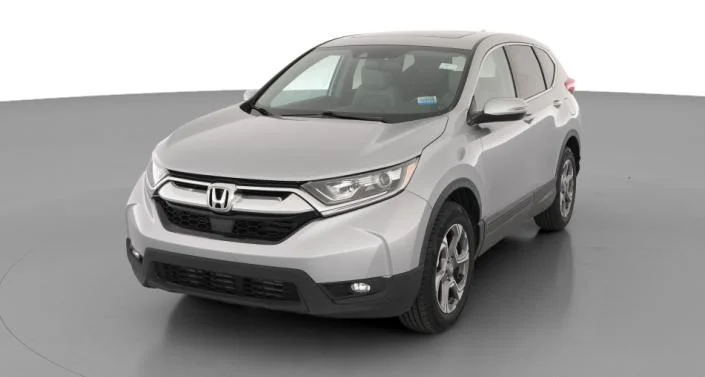
$27,590
2019 EX-L · Silver
20,719 mi · Cleveland, OH
View listing →

$25,990
2017 EX-L · Beige
28,658 mi · Portland, OR
View listing →

$21,590
2015 EX · Black
28,525 mi · Indianapolis, IN
View listing →
Live dealer listings, refreshed periodically. Prices and availability change.
The 2025 CR-V is our best all-around pick in this market snapshot. Its all-trim median ask is $827 more than the 2024 while average mileage is about 9,828 miles lower. That price-and-mileage combination favors the newer year, but it is not a universal verdict. Match gas or hybrid powertrain, drivetrain, trim, equipment, accident history, and fees. A discounted 2024 or cleaner 2023 can still be the stronger vehicle after a proper inspection and complete out-the-door comparison.
The 2015 CR-V LX is the clearest starting point, with a current median ask around $14,681 and average mileage near 120,480. Its advantage is acquisition cost, not newer technology. Review maintenance records, collision history, tires, brakes, fluids, warning lights, and underbody condition. Keep room in the budget for immediate service. A documented vehicle at a slightly higher price can cost less to own than the cheapest listing.
The current dataset favors 2019. Its median ask is only $2,022 more than 2018 and its listings average about 13,473 fewer miles. Both are fifth-generation CR-Vs, so the comparison avoids a major architecture change. The observed advantage still blends trims and drivetrains. Match EX with EX, EX-L with EX-L, and front-wheel drive with front-wheel drive before deciding. Use 2019 as a search preference, then let condition, history, inspection, and total price select the actual vehicle.
Start with 2025 because its median ask is currently $827 more than 2024 and average mileage is roughly 9,828 miles lower. The two years share the same generation, making a like-for-like comparison possible. Separate gas EX or EX-L listings from Sport Hybrid versions, then match drivetrain and equipment. If the 2025 remains similarly priced after dealer fees and financing, it is the stronger value. A cleaner or meaningfully discounted 2024 can still win on the specific transaction.
The blended data cannot prove that. Hybrid inventory is concentrated in newer years and often identified through trim names, while gas examples span the entire sample. Comparing raw averages would mix age, trim, mileage, original price, and powertrain. Compare same-year gas and hybrid CR-Vs with similar equipment, drivetrain, mileage, condition, and history. Then calculate fuel savings from your actual annual miles and local prices, and confirm hybrid warranty timing. That complete ownership comparison is more useful than a universal resale claim.
Do not rely on the feed's generic powertrain field. Decode the VIN, inspect the original window sticker, and match the year-specific trim structure. In the sixth generation, EX and EX-L are commonly gas configurations while Sport-branded trims occupy the hybrid side, but equipment and naming must still be verified for the exact market and model year. The rare CR-V e:FCEV is a plug-in fuel-cell vehicle with hydrogen fueling requirements and should be removed from ordinary gas-versus-hybrid comparisons. Record front- or all-wheel drive, original MSRP, mileage, warranty start date, service history, and accident history. For a hybrid, confirm remaining battery and emissions coverage and obtain relevant diagnostic information. Then compare it with a same-year, similarly equipped gas CR-V and calculate fuel savings from your own annual mileage and local prices. This process prevents a newer, higher-trim vehicle from appearing to prove that one powertrain retains value better when the real difference is age and equipment.
26.0% of CR-V listings in this dataset exceed 100,000 miles, while listings at 120,000 miles or more have a median ask around $14,896. That shows an active high-mileage market, not the probability that a vehicle survives to a target mileage. A high-mileage CR-V can make sense with complete records, a clean structural inspection, and enough price discount for upcoming wear. Ask the inspector to price tires, brakes, suspension, leaks, fluids, and other near-term work before you negotiate.
Our mileage-adjusted fitted curve estimates about 26.7% depreciation after five years, leaving roughly 73.3% of original value. The estimate uses 2,620 current listings across several model years and adjusts asking prices toward an estimated sale price. It is a model-level trajectory, not a VIN appraisal. Purchase price, generation, powertrain, trim, drivetrain, mileage, condition, accident history, region, and the resale market can all change the result. Base your dollar-loss estimate on the price you actually negotiate.
Depreciation is computed from 1,907 real used-car listings. Each listing's asking price is normalized to a standard 12,000 miles per year for the vehicle's age, adjusted by a 5% asking-to-sale estimate, and compared against the original base MSRP for that VIN's trim. Headline 1/3/5-year figures reflect a smoothed retention curve fitted across all model years (the typical trajectory); individual years in the table above can run above or below it with market conditions. Full methodology. Updated August 2026.