

Model comparison
Honda CR-V vs Toyota RAV4
73% vs 83% estimated value retained after five years
See the comparisonThe Toyota RAV4 used market now spans three distinct products: the conventional fourth generation, the gas-and-hybrid fifth generation, and a new 2026 generation that is entirely electrified. Across 2,400 listings, our fitted curve estimates 16.9% depreciation after five years. Strong retention does not make every RAV4 a good deal. The useful comparison is between exact generations, powertrains, drivetrains, and mileage bands rather than one blended model average.
Compare With
Open a side-by-side comparison of five-year value retention, depreciation by model year, used asking prices, repair costs, MPG and safety data.
Model comparison
73% vs 83% estimated value retained after five years
See the comparison
Model comparison
70% vs 83% estimated value retained after five years
See the comparison
Model comparison
72% vs 83% estimated value retained after five years
See the comparison| Model year | Depreciation from MSRP |
|---|---|
| 2026 | 0.0% |
| 2025 | 0.0% |
| 2024 | 0.7% |
| 2023 | 5.7% |
| 2022 | 7.1% |
| 2021 | 13.2% |
| 2020 | 20.9% |
| 2019 | 27.7% |
| 2018 | 35.8% |
| 2017 | 41.3% |
| 2016 | 46.9% |
| 2015 | 51.1% |
Based on 1,744 real used-car listings. Each listing's price is adjusted to a standard 12,000 mi/year for its age and compared to the vehicle's original MSRP; figures reflect a 5% asking-to-sale estimate.
The buying decision
Our best all-around pick is the 2025 RAV4. Its median ask is only $1,852 more than the 2024 while its listings average about 16,424 fewer miles. That is a compelling near-new step before the much more expensive 2026 redesign. Buyers who want the fifth generation at a lower price should start with 2020: it costs just $388 more than the first-year 2019 sample and averages roughly 507 fewer miles.
Best under $25k
Target trim: LE or XLE
Model-year sample across all trims.
The 2017 sits late in the fourth generation and keeps the purchase below newer-generation pricing in our data. LE is the simpler baseline; XLE is worth considering when its equipment, service history, and condition justify the actual premium.
Tradeoff: This generation predates the 2019 platform change. Inspect age-related wear and compare safety equipment by VIN rather than assuming every trim has the same driver-assistance package.
Best fifth-gen value
Target trim: LE or XLE
Model-year sample across all trims.
The 2020 is the clearest value step inside the fifth generation. Its median ask is $388 more than 2019 while average mileage is about 507 miles lower. Start with LE for cost or XLE for equipment, then match drivetrain and powertrain before comparing price.
Tradeoff: Gas, hybrid, front-wheel-drive, and all-wheel-drive examples are not interchangeable. The year-level figures shown here blend those configurations.
Best near-new
Target trim: LE or XLE
Model-year sample across all trims.
The 2025 remains in the proven fifth-generation body and currently asks only $1,852 more than 2024 despite averaging about 16,424 fewer miles. It is the near-new year to price first before paying the 2026 redesign premium.
Tradeoff: Compare a used 2025 with a new-car quote after incentives, financing, destination charges, and warranty timing. Hybrid and gas trims need separate comparisons.
Generation context
The two redesign boundaries matter more than a one-year age difference. Decide which RAV4 architecture and powertrain family you want before comparing listings.
2015-2018
Fourth generation
Median asking prices run from $15,193 to $18,994, with average mileage spanning 91,729 to 120,408 miles.
These cars share the fourth-generation foundation launched for 2013, with a two-row cabin and conventional gasoline drivetrain in the core lineup. They are the entry point in this dataset. At this age, service history, tires, collision repair, and underbody condition should carry more weight than a small model-year price difference.
Toyota: fourth-generation RAV4 launch2019-2025
Fifth generation
Median asking prices run from $22,926 to $33,047, with average mileage spanning 23,868 to 86,430 miles.
Toyota moved the 2019 RAV4 to the TNGA-K platform and offered gas and hybrid powertrains with a wider range of road-focused and adventure-oriented trims. This is the deepest used-market era, but that variety makes an all-trim median less precise. Compare the same powertrain, drivetrain, and equipment level.
Toyota: all-new fifth-generation 2019 RAV42026-present
Sixth generation
Median asking prices run from $49,084 to $49,084, with average mileage spanning 7 to 7 miles.
The sixth generation moves the U.S. lineup to hybrid and plug-in-hybrid powertrains. Our 2026 sample averages only a handful of miles and carries a large price step, so treat it as effectively new inventory. Compare full out-the-door quotes and exact powertrain availability rather than using it as a normal used-year observation.
Toyota: all-new sixth-generation 2026 RAV4Same-horizon comparison
These fitted curves use the same five-year horizon and listing methodology. That makes them more comparable than mixed-age averages, but they still describe model-level markets rather than individual vehicles.
The RAV4 leads this group in our fitted curves by 9.8 percentage points versus the CR-V and 25.7 points versus the Rogue. That retention advantage can be erased by overpaying, financing, or buying the wrong configuration. Use it as one input after comparing actual price, condition, equipment, and expected ownership costs.
Retains about 83.1% after five years
Retains about 73.3% after five years
Retains about 57.4% after five years
Curves adjust listing prices for mileage and use a common asking-to-sale estimate. They do not include taxes, incentives, insurance, repairs, or fuel savings.
Configuration strategy
A trim badge does not fully identify a RAV4. Gas, hybrid, plug-in hybrid, front-wheel drive, and all-wheel drive can change both purchase price and operating costs.
Gas LE / XLE
Start here when acquisition cost and mechanical simplicity lead. Compare front-wheel drive with front-wheel drive and all-wheel drive with all-wheel drive; the drivetrain premium should be visible in the actual transaction.
Hybrid
Compare same-year hybrid and gas examples, then estimate fuel savings from your annual mileage and local prices. Do not infer hybrid retention from a cross-year average because hybrid inventory skews newer.
Plug-in hybrid
Verify charging access, battery and emissions warranty timing, original equipment, and any incentive eligibility. A high advertised price can only make sense when the use case supports the premium.
Adventure / TRD
Adventure-oriented trims can carry meaningful equipment and appearance premiums. Inspect underbody use and tires, then compare with an XLE or Limited instead of assuming the badge will return its cost at resale.
Before you commit
The year narrows the search. The VIN, drivetrain, records, and inspection determine whether a specific RAV4 is worth the asking price.
Confirm gas, hybrid, or plug-in hybrid and front- or all-wheel drive from the VIN and original equipment record. Listing titles frequently omit distinctions that materially affect value.
Use the NHTSA or Toyota lookup for the specific vehicle. Model-year recall counts do not show whether this RAV4 is included or whether its remedy was completed.
Check tread depth, matching tire type, age, and wear across all four corners. Uneven replacement can reveal alignment issues and adds immediate ownership cost.
For electrified models, confirm the original in-service date, remaining coverage, service history, and diagnostic findings. Apply those facts to the exact vehicle rather than the model average.
Analyst notes
RAV4 retention is strong, but powertrain and near-new inventory mix can make the raw table look more precise than it is.
01
Some recent years show little or no depreciation because listing prices, VIN-level equipment, and base MSRP do not line up perfectly. Near-new dealer asks can also exceed a base sticker. Always compare full configuration and transaction price.
02
The 2026 sample averages about 7 miles with a median ask near $49,084. It should not be treated like a settled used-car market or compared directly with a typical 2025 listing.
03
Hybrid and plug-in-hybrid availability expands in newer years. Pooling every year rewards whichever powertrain is newest and cannot establish that one version depreciates less.
Estimated value of a typical Toyota RAV4 as it ages, from a ~$36,100 new price. We start at age two because near-new asking prices are too noisy to treat as first-year appreciation.
| Age | Retained | Est. value | Lost that year | Total lost |
|---|---|---|---|---|
| 2 yrs | 100% | $35,998 | −$102 | −$102 |
| 3 yrs | 94% | $33,880 | −$2,118 | −$2,220 |
| 4 yrs | 88% | $31,886 | −$1,994 | −$4,214 |
| 5 yrs | 83% | $30,009 | −$1,877 | −$6,091 |
| 6 yrs | 78% | $28,243 | −$1,766 | −$7,857 |
| 7 yrs | 74% | $26,581 | −$1,662 | −$9,519 |
| 8 yrs | 69% | $25,017 | −$1,564 | −$11,083 |
Interactive tool
Estimate a used RAV4's value from its year and mileage, using our depreciation model.
$36,100
about typical mileage
At 12,000 miles (about typical for a 1-year-old car, ~12,000 mi). Estimate only — actual value depends on condition, trim, options, and local demand.
Cost of ownership
The two biggest costs — depreciation and fuel — over five years for a recent model bought new (~$36,100).
Fuel cost from the EPA. Maintenance, insurance, taxes, and financing are additional and vary by driver and location.
Across 2,400 Toyota RAV4 listings.
Accident-free
94.3%
One-owner
44.7%
Avg owners
1.7
Personal use
51.1%
Certified (CPO)
0.5%
CPO premium
+$150
Mileage profile across 2,400 listings.
Over 100k mi
24.9%
Over 150k mi
4.8%
Highest mileage
377,355 mi
Price at 120k+ mi
$14,985
Roughly 24.9% of listed Toyota RAV4s have crossed 100,000 miles, and 4.8% are past 150,000. That shows there is an active market for high-mileage RAV4s; it is not a survival rate or a promise that a specific car will reach either milestone.
| Year | Depreciation | MSRP | Median Price | Listings |
|---|---|---|---|---|
| 2026 | 0.0% | $36,100 | $49,084 | 59 |
| 2025 | 0.0% | $32,710 | $33,047 | 141 |
| 2024 | 0.7% | $31,585 | $31,195 | 143 |
| 2023 | 5.7% | $31,185 | $30,212 | 110 |
| 2022 | 7.1% | $29,845 | $27,797 | 104 |
| 2021 | 13.2% | $28,345 | $24,996 | 113 |
| 2020 | 20.9% | $27,350 | $23,314 | 200 |
| 2019 | 27.7% | $27,450 | $22,926 | 200 |
| 2018 | 35.8% | $27,150 | $18,994 | 200 |
| 2017 | 41.3% | $26,900 | $17,819 | 177 |
| 2016 | 46.9% | $27,670 | $16,620 | 137 |
| 2015 | 51.1% | $26,640 | $15,193 | 160 |
A sample of real listings behind the figures above.
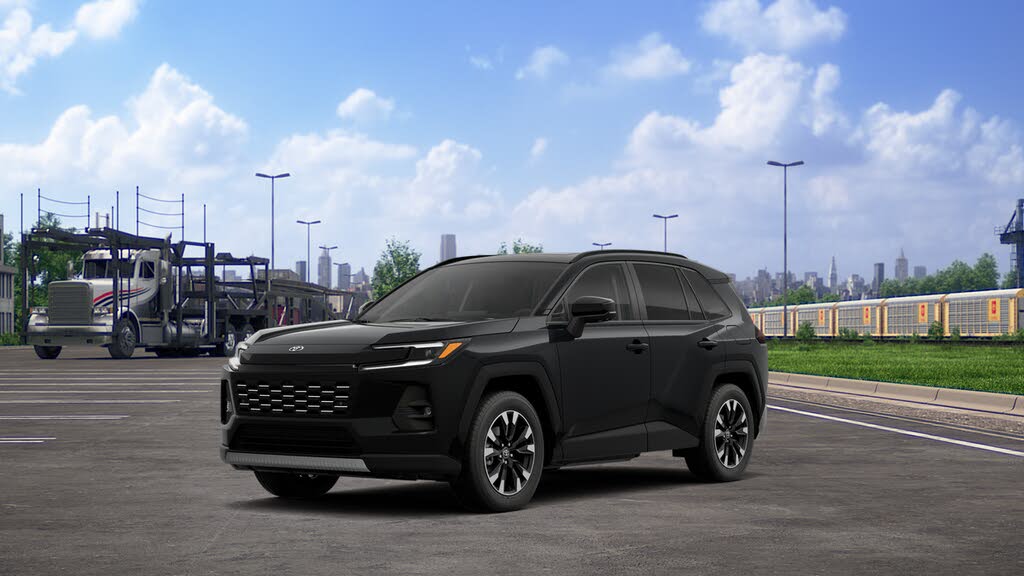
$48,812
2026 SE · Black
5 mi · Richmond, KY
View listing →

$38,590
2024 XLE Premium · White
3,479 mi
View listing →

$30,990
2022 XLE · White
19,231 mi · Dallas, TX
View listing →

$28,590
2019 XLE · Silver
18,206 mi · Dallas, TX
View listing →
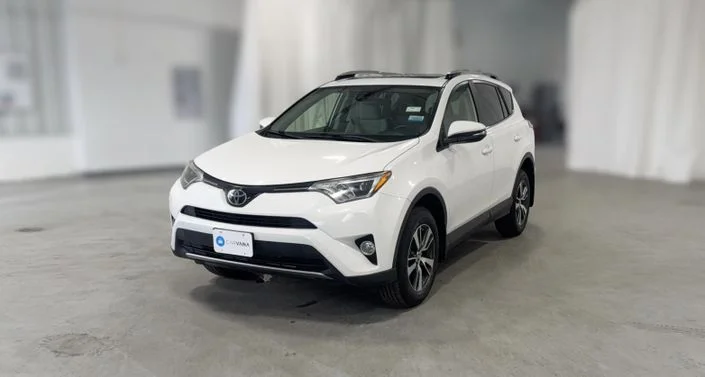
$24,590
2017 XLE · White
52,088 mi · Dallas, TX
View listing →
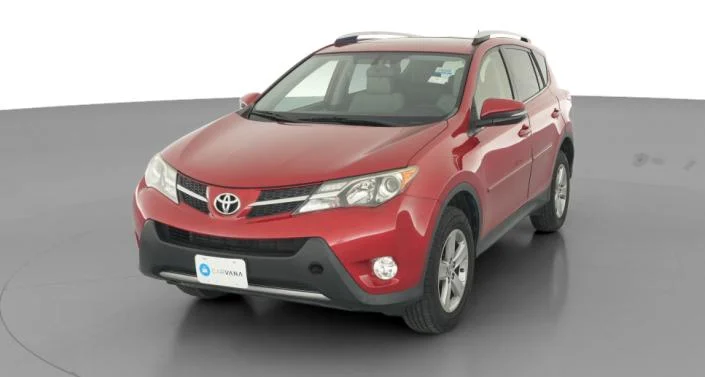
$23,590
2015 XLE · Red
33,474 mi · San Antonio, TX
View listing →
Live dealer listings, refreshed periodically. Prices and availability change.
The 2025 RAV4 is our best all-around pick in this snapshot because its median ask is only $1,852 more than the 2024 while average mileage is about 16,424 miles lower. It also remains in the fifth-generation body before the expensive 2026 reset. That recommendation is a search starting point, not a universal answer. Match gas or hybrid powertrain, drivetrain, trim, mileage, history, and seller fees. A cleaner 2024 or properly priced 2023 can still be the better individual vehicle.
Start with a 2017 RAV4 LE or XLE. The current year-level median is about $17,819, with average mileage near 100,768. LE provides the simple price baseline; XLE can be worthwhile for equipment at a modest premium. At this age, prioritize maintenance records, tires, brakes, collision history, corrosion exposure, and a pre-purchase inspection. Preserve part of the budget for immediate service instead of spending everything on the advertised price.
The 2020 has the stronger market position in this dataset. It asks only $388 more than 2019 while averaging about 507 fewer miles. Both use the fifth-generation platform, making this a more useful comparison than crossing the 2019 redesign boundary. The advantage is still an all-trim average. Compare the same gas or hybrid powertrain, drivetrain, trim, mileage, condition, and fees. Use 2020 as the first filter, then let the specific vehicle and negotiated total decide.
Treat them as different products. The 2025 is the final year of the fifth-generation gas-and-hybrid lineup in this dataset; the 2026 starts a redesigned, fully electrified lineup with hybrid and plug-in-hybrid choices. Our 2026 listings average only 7 miles and carry a median ask near $49,084, so they behave like new inventory. Compare a used 2025 against a complete new 2026 quote, including equipment, incentives, financing, taxes, warranty timing, and your fuel or charging use case.
This cross-year dataset cannot establish that by itself. Hybrid examples are concentrated in newer years, while gas RAV4s span the full sample. A lower raw depreciation number can therefore measure age, trim, and original-price mix instead of powertrain demand. Compare gas and hybrid vehicles from the same model year with similar MSRP, equipment, drivetrain, mileage, condition, and history. Then add expected fuel savings, battery warranty timing, and purchase-price premium. That same-year ownership calculation is more useful than a blended resale ranking.
Begin with the same model year and a similar equipment level, then separate purchase price from operating cost. Record drivetrain, original MSRP, mileage, condition, accident history, warranty start date, and dealer fees. For gas and hybrid models, estimate annual fuel expense from your real mileage, local fuel price, and realistic economy rather than the best published number. For a plug-in hybrid, add home charging availability, electricity price, daily electric miles, charging equipment, and any incentive or tax eligibility that applies to the actual transaction. Confirm battery and emissions warranty coverage by VIN and location, and obtain a diagnostic inspection when appropriate. Do not compare a new upper-trim plug-in hybrid with an older base gas LE and call the result a powertrain premium. Convert acquisition cost, financing, energy, insurance, likely maintenance, and expected resale into the same ownership period. The right answer depends on how and where you drive, not which powertrain has the lowest blended depreciation percentage. Run the calculation over your expected ownership period so a larger upfront premium is not hidden by annual savings.
24.9% of RAV4 listings in this dataset exceed 100,000 miles, while listings at 120,000 miles or more have a median ask around $14,985. That is an inventory profile, not a survival rate. A high-mileage RAV4 can make sense with complete records, a clean structural inspection, and a price that leaves room for tires, brakes, suspension, fluids, and age-related repairs. Ask the inspector to translate near-term needs into dollars before negotiating.
Our mileage-adjusted fitted curve estimates about 16.9% depreciation after five years, leaving roughly 83.1% of original value. The estimate uses 2,400 current listings across several generations and adjusts asking prices toward an estimated sale price. It is not a valuation for one VIN. Purchase price, generation, powertrain, drivetrain, trim, mileage, condition, accident history, region, and the market when you sell can all change the result. Calculate expected dollar loss from the price you actually negotiate.
Depreciation is computed from 1,744 real used-car listings. Each listing's asking price is normalized to a standard 12,000 miles per year for the vehicle's age, adjusted by a 5% asking-to-sale estimate, and compared against the original base MSRP for that VIN's trim. Headline 1/3/5-year figures reflect a smoothed retention curve fitted across all model years (the typical trajectory); individual years in the table above can run above or below it with market conditions. Full methodology. Updated August 2026.