

Model comparison
Subaru Outback vs Toyota Highlander
63% vs 70% estimated value retained after five years
See the comparisonThe Subaru Outback is not one used-car market. The 2015-2019 cars are the naturally aspirated fifth generation, and 2020 onward is an all-new sixth generation on the Subaru Global Platform, with standard Symmetrical All-Wheel Drive, standard EyeSight driver assistance, and the return of a turbocharged XT engine for the first time since 2009. Across 2,927 current listings, our fitted curve estimates 36.9% depreciation after five years, leaving roughly 63.1% of original value. That is respectable, but as the peer comparison below shows it is not the class leader — so the useful question is not whether an Outback holds value. It is which generation and configuration give you the right mix of price, mileage, all-weather capability, and remaining life.
Compare With
Open a side-by-side comparison of five-year value retention, depreciation by model year, used asking prices, repair costs, MPG and safety data.
Model comparison
63% vs 70% estimated value retained after five years
See the comparison
Model comparison
54% vs 63% estimated value retained after five years
See the comparison
Model comparison
55% vs 63% estimated value retained after five years
See the comparison| Model year | Depreciation from MSRP |
|---|---|
| 2026 | 8.7% |
| 2025 | 15.1% |
| 2024 | 19.3% |
| 2023 | 24.7% |
| 2022 | 28.5% |
| 2021 | 33.6% |
| 2020 | 38.1% |
| 2019 | 45.1% |
| 2018 | 51.5% |
| 2017 | 56.1% |
| 2016 | 59.5% |
| 2015 | 64.4% |
Based on 2,223 real used-car listings. Each listing's price is adjusted to a standard 12,000 mi/year for its age and compared to the vehicle's original MSRP; figures reflect a 5% asking-to-sale estimate.
The buying decision
Our best all-around pick is the 2021 Outback. It is the second model year of the sixth generation that launched all-new for 2020, so it carries the Subaru Global Platform, standard Symmetrical All-Wheel Drive, and standard EyeSight driver assistance, while sitting comfortably past the steepest early depreciation. In this market snapshot it asks only about $1,535 more than the 2020, and a 2022 costs about $1,880 more than it, so the 2021 lands in the value pocket of the modern generation. Because an Outback's price turns as much on trim and on whether it carries the turbocharged XT engine as on model year, treat every pick below as a starting point you still have to match on configuration.
Best on a budget
Target trim: 2.5i Premium
Model-year sample across all trims.
The 2017 2.5i Premium is a well-equipped fifth-generation Outback with the naturally aspirated BOXER engine and Subaru's standard Symmetrical All-Wheel Drive, bought without near-new pricing. Its median ask is $14,709, about $1,810 more than the 2016, while average mileage is roughly 8,409 miles lower. Premium keeps the purchase simple: prioritize service records, tires, brakes, and accident history over optional equipment.
Tradeoff: This is a used wagon with real miles, so a pre-purchase inspection and a check for all-wheel-drive, tire-wear, and corrosion condition matter more than the lowest advertised price. Confirm that all four tires match in size and wear, because a mismatched set can put uneven load on an all-wheel-drive system.
Best overall
Target trim: Premium
Model-year sample across all trims.
This is the strongest price-to-age point in our current data. The median ask is $23,098, about $1,535 more than the 2020, and it carries the full sixth-generation package: the Subaru Global Platform, standard Symmetrical All-Wheel Drive, and standard EyeSight. It averages roughly 5,403 fewer miles than the 2020, so let condition and history, not the odometer alone, break the tie. Premium is the volume trim the rest of the market is priced against.
Tradeoff: The 2020 and 2021 are close enough that condition, service history, and trim should decide between them. A 2022 costs about $1,880 more than the 2021 in this snapshot, so if you find a clean one, compare it directly rather than paying up for the badge. Decide whether you want the turbocharged XT before comparing two listings, because the turbo and non-turbo cars are priced as different vehicles.
Best near-new
Target trim: Premium or Limited
Model-year sample across all trims.
The 2023 is a late-cycle sixth-generation Outback with the standard driver-assistance and platform upgrades already baked in. Its median ask is $27,028, and a 2024 costs about $1,967 more than it, so the 2023 is often the cheaper way into a nearly new, post-redesign wagon. Compare Premium and Limited directly at similar mileage rather than assuming the higher trim is automatically the better value.
Tradeoff: Near-new asking prices can sit close to or above MSRP. Compare the used car's full out-the-door price with a new-Outback quote, financing incentives, the warranty start date, and the exact trim and drivetrain before assuming the used listing is the better deal. Verify whether a low-mileage example was a demo or loaner before treating low age as low use.
Generation context
Treating a dozen model years and an all-new redesign as one product hides the decisions that matter. The 2020 sixth-generation launch is the clean dividing line: it reset the platform, made driver assistance standard, and brought back a turbocharged engine, so the two eras are genuinely different cars.
2015-2019
Fifth generation
Median asking prices run from $11,245 to $18,318, with average mileage spanning 94,212 to 129,431 miles.
The fifth-generation Outback ran from 2015 through 2019 with a naturally aspirated BOXER engine and Subaru's standard Symmetrical All-Wheel Drive. These are the budget years, and because the platform stayed consistent across the run, the individual car's history dominates the decision: confirm maintenance records, inspect tires and brakes, and treat prior collision or corrosion evidence as more important than a one-year price difference. The 2020 redesign is the dividing line — everything after it is a materially different car — so shop these years for value, not for the newest technology.
Subaru: all-new sixth-generation 2020 Outback2020-present
Sixth generation
Median asking prices run from $21,563 to $48,083, with average mileage spanning 67 to 78,573 miles.
The 2020 Outback was an all-new sixth generation on the Subaru Global Platform, with standard Symmetrical All-Wheel Drive, standard EyeSight driver assistance, and the return of a turbocharged engine for the first time since 2009 — a 2.4-liter turbocharged BOXER making 260 horsepower and 277 lb-ft, standard on XT models. This is the deepest, most comparable part of the market and the generation most buyers should focus on. Because near-new inventory sits close to new-car pricing, shop the newest years against new-vehicle transaction prices, incentives, and warranty coverage rather than against a decade-old Outback's retained percentage.
Subaru: all-new sixth-generation 2020 OutbackSame-horizon comparison
We fitted the same five-year depreciation curve to the Outback and the two crossover peers with enough data in our catalog, the Toyota RAV4 and the Subaru Forester. Lower is better. Holding the time horizon constant is more useful than averaging every model year together, but all three carry wide trim and drivetrain ranges, so read this at the nameplate level.
In these fitted curves, the RAV4 actually holds up better here, its fitted curve losing about 20.1 percentage points less than the Outback's over five years. The Forester, the Outback's smaller sibling, also holds up better here, its curve losing about 8.6 points less over the same horizon. That is an honest result worth sitting with: the Outback's wagon practicality and standard all-wheel drive are genuinely useful, but neither of these peers has to give up value faster than the Outback to earn its place, and in this snapshot both hold value better. Resale is still only one part of the transaction — trim, drivetrain, mileage, and the price you actually negotiate move a specific car more than the badge-level gap — so match configuration and condition before you let any curve pick the crossover, and remember that weaker retention can also make a used Outback cheaper to enter.
Retains about 83.1% after five years
Retains about 71.6% after five years
Retains about 63.1% after five years
Curves use the same mileage-adjusted listing methodology. They do not normalize trim, drivetrain, the turbocharged XT engine, incentives, taxes, financing, insurance, fuel, or maintenance.
Trim strategy
Trim and engine choice change what you pay, but our cross-year sample does not support a clean best-resale winner. Newer XT, Onyx, and Wilderness inventory naturally shows less depreciation than older 2.5i stock, so averaging retained value across all years just rewards the youngest cohort. Use this decision framework instead.
2.5i Premium
Start here when total cost matters most. The volume Premium trim is the version the rest of the market is priced against, so spend the saved budget on a cleaner history, lower mileage, or fresher tires before moving up for features you will not use.
Limited / Touring
These trims add leather, larger screens, and convenience features that can be compelling used once their original option premium has softened. Price the specific features you care about, then compare the actual dollar premium against a Premium in the same year and condition.
Onyx / Wilderness
The Onyx and Wilderness trims add appearance, traction, and — on Wilderness — extra ground clearance and rougher-road hardware. Choose them for capability you will actually use, not as an investment thesis, and compare each within the same model year and drivetrain assumptions before paying the premium.
2.5i vs. XT turbo
For 2015-2019 cars the engine is the naturally aspirated BOXER; for 2020 onward an available 2.4-liter turbocharged XT returns for the first time since 2009. Do not compare a used non-turbo car's retained value directly with a near-new turbo's. Decide which generation and engine you want first, then compare within it and weigh the XT's added power against its price premium.
Analyst notes
A large dataset can still produce a bad conclusion when unlike cars are averaged together. These are the three interpretation rules we used for this guide.
01
Our 2026 sample shows a $48,083 median ask against a $44,995 base MSRP, with only 67 average miles. Those listings can reflect optioned trims, delivery costs, dealer pricing, or effectively new inventory. We do not read that spread as the car gaining value, especially at the newest end of the range where supply is thin and mostly untitled.
02
XT, Onyx, and Wilderness listings skew toward the newest, least-depreciated model years, while older 2.5i stock fills out the bottom of the sample. Averaging retained value across all years rewards the youngest cohort, not the strongest engine or trim. A defensible comparison needs the same model year, similar mileage, and the same drivetrain and engine, which is why this guide never crowns a single resale-winning trim.
03
NHTSA complaint and recall records are useful investigation leads, but they are not normalized for the number of cars sold, miles driven, or years on the road. A high count should send you to the underlying reports and a VIN recall lookup; it should not become a reliability score on its own without a sales or exposure denominator.
Estimated value of a typical Subaru Outback as it ages, from a ~$44,995 new price. We start at age two because near-new asking prices are too noisy to treat as first-year appreciation.
| Age | Retained | Est. value | Lost that year | Total lost |
|---|---|---|---|---|
| 2 yrs | 82% | $36,714 | −$3,292 | −$8,281 |
| 3 yrs | 75% | $33,694 | −$3,020 | −$11,301 |
| 4 yrs | 69% | $30,922 | −$2,772 | −$14,073 |
| 5 yrs | 63% | $28,378 | −$2,544 | −$16,617 |
| 6 yrs | 58% | $26,043 | −$2,335 | −$18,952 |
| 7 yrs | 53% | $23,901 | −$2,142 | −$21,094 |
| 8 yrs | 49% | $21,935 | −$1,966 | −$23,060 |
Interactive tool
Estimate a used Outback's value from its year and mileage, using our depreciation model.
$28,400
about typical mileage
At 60,000 miles (about typical for a 5-year-old car, ~60,000 mi). Estimate only — actual value depends on condition, trim, options, and local demand.
Cost of ownership
The two biggest costs — depreciation and fuel — over five years for a recent model bought new (~$44,995).
Fuel cost from the EPA. Maintenance, insurance, taxes, and financing are additional and vary by driver and location.
Across 2,927 Subaru Outback listings.
Accident-free
90.5%
One-owner
52.4%
Avg owners
1.7
Personal use
61.9%
Certified (CPO)
0.5%
CPO premium
+$1,550
Mileage profile across 2,927 listings.
Over 100k mi
26.2%
Over 150k mi
5.9%
Highest mileage
337,554 mi
Price at 120k+ mi
$11,485
Roughly 26.2% of listed Subaru Outbacks have crossed 100,000 miles, and 5.9% are past 150,000. That shows there is an active market for high-mileage Outbacks; it is not a survival rate or a promise that a specific car will reach either milestone.
| Year | Depreciation | MSRP | Median Price | Listings |
|---|---|---|---|---|
| 2026 | 8.7% | $44,995 | $48,083 | 80 |
| 2025 | 15.1% | $37,970 | $32,480 | 190 |
| 2024 | 19.3% | $35,795 | $28,995 | 197 |
| 2023 | 24.7% | $35,295 | $27,028 | 198 |
| 2022 | 28.5% | $34,295 | $24,978 | 197 |
| 2021 | 33.6% | $33,595 | $23,098 | 197 |
| 2020 | 38.1% | $33,445 | $21,563 | 192 |
| 2019 | 45.1% | $32,845 | $18,318 | 200 |
| 2018 | 51.5% | $32,695 | $16,688 | 181 |
| 2017 | 56.1% | $32,390 | $14,709 | 200 |
| 2016 | 59.5% | $30,395 | $12,899 | 200 |
| 2015 | 64.4% | $29,995 | $11,245 | 191 |
A sample of real listings behind the figures above.
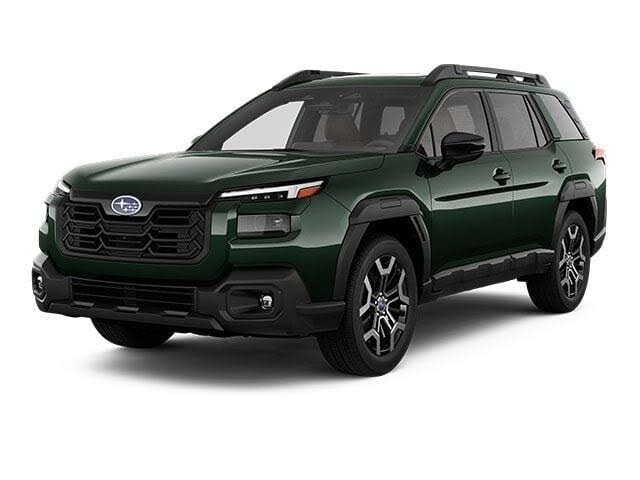
$52,371
2026 Touring XT · Green
1 mi · White River Junction, VT
View listing →

$34,590
2024 Limited XT · Brown
7,637 mi
View listing →

$29,998
2022 Limited · Silver
6,252 mi · Smithtown, NY
View listing →

$19,990
2019 2.5i Limited · Gray
79,667 mi · Seattle, WA
View listing →
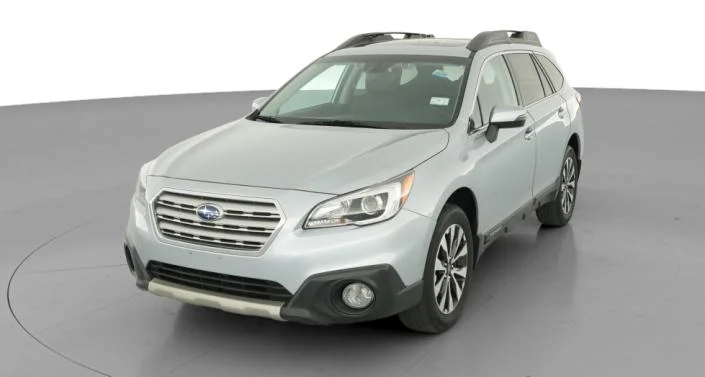
$22,590
2017 2.5i Limited · Silver
42,232 mi · Columbus, OH
View listing →

$17,990
2015 2.5i Premium PZEV · Silver
69,356 mi · Tampa, FL
View listing →
Live dealer listings, refreshed periodically. Prices and availability change.
The 2021 Outback is our best all-around pick in the current dataset. Its median asking price is $23,098, about $1,535 more than the 2020, and it carries the full sixth-generation package: the Subaru Global Platform, standard Symmetrical All-Wheel Drive, and standard EyeSight driver assistance. It sits well past the steepest early depreciation, which is what puts it in the value pocket of the modern generation. That does not make every 2021 better than every 2020 or 2022: trim, whether it carries the turbocharged XT engine, mileage, condition, and local price should decide between two specific cars. Compare at least three configuration-matched examples and negotiate from the cleanest one, not the national median.
Start with a 2017 Outback 2.5i Premium. Its current median ask is $14,709, about $1,810 more than the 2016, and it gives you the fifth-generation naturally aspirated BOXER and Subaru's standard Symmetrical All-Wheel Drive without near-new pricing. The tradeoff is mileage: these listings average 111,774 miles. At this age, buy the best-documented car rather than the cheapest one. Confirm maintenance history, inspect tires and brakes, check that all four tires match for the all-wheel-drive system, and pay for an independent pre-purchase inspection. Keep part of the budget for age-related service instead of spending every dollar on the purchase itself.
It can be, but they answer different questions. The 2023 is a late-cycle sixth-generation Outback with the standard platform and driver-assistance content already included, and in this snapshot a 2024 costs about $1,967 more than it, so the 2023 is often the cheaper way into a nearly new wagon. An older sixth-generation car saves more money up front, while a 2024 or newer gives you a longer remaining warranty. If you want maximum content per dollar, the 2023 is a strong middle ground. Compare exact trims, mileage, warranty start dates, financing, and out-the-door totals; a discounted new Outback can occasionally beat an overpriced used one even when its sticker looks higher.
In our fitted five-year curves, the Outback gives up more value than both peers here, which is worth knowing before you buy. The RAV4 holds up better, losing about 20.1 percentage points less than the Outback over five years. The Forester, the Outback's smaller sibling, also holds up better, losing about 8.6 points less. Weaker retention is not automatically a reason to avoid the Outback: it can make a used one cheaper to enter, and its extra wagon space and standard all-wheel drive may matter more to you than a few points of resale. Match configuration, mileage, and condition, then let the price you negotiate drive the decision.
26.2% of Outbacks in our listing sample already have more than 100,000 miles, and about 5.9% have crossed 150,000, with high-mileage examples asking a median around $11,485. That active high-mileage market shows the wagon stays in service, but it is not a guarantee that any individual example has remaining life. A high-mileage Outback can make sense when the service history is complete, wear items are priced into the deal, the all-wheel-drive system and tires are sound, and an independent inspection is clean. Ask the inspector to separate normal wear from deferred repairs and to price each near-term item, because deferred maintenance can erase the purchase-price savings quickly.
Our mileage-adjusted fitted curve estimates that a Subaru Outback loses about 36.9% of its original value after five years, retaining roughly 63.1%. That is based on 2,927 listings across multiple model years, with asking prices adjusted toward an estimated sale price. It is a nameplate-level trajectory, not a quote for a specific VIN. Your purchase price, trim, whether it carries the turbocharged XT engine, mileage, condition, and the new-vehicle market at resale can move the result materially. As the peer comparison shows, the Outback is not the retention leader in its segment, so for a real purchase calculate the dollar loss from the price you negotiate, not from an abstract national MSRP.
Use the count as a prompt to investigate, not as an automatic rejection. NHTSA complaint totals are not failure rates: older years have had more time to accumulate reports, popular years put more vehicles on the road, and one issue can generate many similar complaints. Open the model-year page, read the complaint categories, check open recalls by VIN, and ask whether documented repairs were completed. Separate a safety recall with a defined remedy from an unverified owner complaint, because they carry different evidence and next steps. The specific car's inspection and history matter more than a raw count without a sales or exposure denominator behind it.
Depreciation is computed from 2,223 real used-car listings. Each listing's asking price is normalized to a standard 12,000 miles per year for the vehicle's age, adjusted by a 5% asking-to-sale estimate, and compared against the original base MSRP for that VIN's trim. Headline 1/3/5-year figures reflect a smoothed retention curve fitted across all model years (the typical trajectory); individual years in the table above can run above or below it with market conditions. Full methodology. Updated August 2026.