

Model comparison
Jeep Wrangler vs Toyota 4Runner
70% vs 82% estimated value retained after five years
See the comparisonThe Toyota 4Runner is one of the few body-on-frame midsize SUVs left, and it is not one used market. The 2010-2024 fifth-generation trucks with their 4.0-liter V6 anchor the entire dataset, while the all-new 2025 sixth generation resets the formula with turbocharged and hybrid power. Across 2,554 current listings, our fitted curve estimates 17.8% depreciation after five years, leaving roughly 82.2% of original value, which is unusually strong retention for the segment. The useful question is not whether a 4Runner holds value. It is which generation and configuration give you the right mix of price, mileage, capability, and remaining life.
Compare With
Open a side-by-side comparison of five-year value retention, depreciation by model year, used asking prices, repair costs, MPG and safety data.
Model comparison
70% vs 82% estimated value retained after five years
See the comparison
Model comparison
81% vs 82% estimated value retained after five years
See the comparison
Model comparison
49% vs 82% estimated value retained after five years
See the comparison| Model year | Depreciation from MSRP |
|---|---|
| 2026 | 1.2% |
| 2025 | 0.0% |
| 2024 | 2.1% |
| 2023 | 7.7% |
| 2022 | 9.0% |
| 2021 | 10.6% |
| 2020 | 16.0% |
| 2019 | 20.3% |
| 2018 | 25.5% |
| 2017 | 31.4% |
| 2016 | 35.4% |
| 2015 | 38.7% |
Based on 1,925 real used-car listings. Each listing's price is adjusted to a standard 12,000 mi/year for its age and compared to the vehicle's original MSRP; figures reflect a 5% asking-to-sale estimate.
The buying decision
Our best all-around pick is the 2020 4Runner. It is a mature, late fifth-generation truck with the proven 4.0-liter V6 and body-on-frame construction, and it lands before the all-new 2025 turbo-and-hybrid reset that pulled near-new prices sharply higher. In this market snapshot it costs about $2,941 more than the 2019 while averaging roughly 8,321 fewer miles. Because a 4Runner's price is driven as much by two- or four-wheel drive and off-road hardware as by model year, treat every pick below as a starting point you still have to match on configuration.
Best on a budget
Target trim: SR5
Model-year sample across all trims.
The 2016 SR5 is an early fifth-generation entry point to the 4.0-liter V6 and the body-on-frame platform that built this truck's durability reputation. Its median ask is $24,424, about $2,327 more than the 2015, while average mileage is roughly 18,036 miles lower. SR5 keeps the purchase simple: prioritize service records, frame and underbody condition, and accident history over optional equipment.
Tradeoff: This is a used SUV with real miles, so a pre-purchase inspection and a check for towing, off-road, and corrosion wear matter more than the lowest advertised price. Do not compare a two-wheel-drive SR5 with a four-wheel-drive example and treat the gap as savings.
Best overall
Target trim: SR5 or TRD Off-Road
Model-year sample across all trims.
This is the strongest price-to-age point in our current data. The median ask is $34,455, about $2,941 more than the 2019, while average mileage is roughly 8,321 miles lower. It is a late fifth-generation truck, built before the 2025 turbo-and-hybrid redesign, so you get the mature V6 platform at a gentler price than near-new inventory. Choose SR5 for lower total spend or TRD Off-Road for the suspension and traction hardware you actually plan to use.
Tradeoff: The 2019 and 2020 are close enough that condition, service history, and configuration should break the tie. A 2021 costs about $3,008 more than the 2020 in this snapshot, so if you find a clean one, compare it directly rather than paying a premium for the 2020 badge alone. Match two- or four-wheel drive and trim before comparing two listings.
Best near-new
Target trim: SR5 or TRD Off-Road
Model-year sample across all trims.
The 2025 opens the all-new sixth generation on Toyota's TNGA-F platform, retiring the V6 for a turbocharged 2.4-liter i-FORCE four-cylinder rated up to 278 horsepower and 317 lb-ft, with an available i-FORCE MAX hybrid making up to 326 horsepower and 465 lb-ft. In this snapshot its median ask is $49,251, about $21,946 less than the 2026, so the first sixth-generation year can be the cheaper way into the new SUV.
Tradeoff: Near-new asking prices can sit close to or above MSRP. Compare the used truck's full out-the-door price with a new-SUV quote, financing incentives, the warranty start date and any remaining hybrid battery coverage, and the exact drivetrain and trim before assuming the used listing is the better deal.
Generation context
Treating fifteen model years and an all-new redesign as one product hides the decisions that matter. Each generation has a different powertrain, price floor, and reason to buy, and the split is unusually clean here because the 4Runner changed so little for so long before its 2025 reinvention.
2010-2024
Fifth generation
Median asking prices run from $22,097 to $47,888, with average mileage spanning 35,676 to 146,091 miles.
The fifth-generation 4Runner ran an unusually long fifteen model years, from 2010 through 2024, all of them powered by a 4.0-liter V6 and built on a traditional body-on-frame chassis. That long, stable production run and its reputation for durability are a big part of why the 4Runner holds its value so well. Because so little changed mechanically across the run, the individual truck's history dominates the decision: inspect the frame and underbody for corrosion, confirm maintenance records, and treat rust, prior collision, or heavy off-road evidence as more important than a one- or two-year price difference. Our catalog covers 2015 onward, so the deepest, most comparable inventory sits in the second half of this generation.
Toyota: 4Runner fifth (2010-2024) and sixth (2025) generations2025-present
Sixth generation
Median asking prices run from $49,251 to $71,197, with average mileage spanning 628 to 15,190 miles.
The 2025 4Runner is an all-new sixth generation on Toyota's TNGA-F platform. Toyota retired the long-serving V6 in favor of a turbocharged 2.4-liter i-FORCE four-cylinder rated up to 278 horsepower and 317 lb-ft, with an available i-FORCE MAX hybrid making up to 326 horsepower and 465 lb-ft. Because almost every one of these SUVs is nearly new, shop them against new-vehicle transaction prices, incentives, and warranty coverage rather than against a decade-old 4Runner's retained percentage. A first-year redesign also carries far less resale history than the deeply proven fifth generation, so weigh the newer powertrains and technology against that shorter track record.
Toyota: all-new 2025 4Runner (sixth generation)Same-horizon comparison
We fitted the same five-year depreciation curve to the 4Runner and the two off-road-capable SUV peers with enough data in our catalog, the Jeep Grand Cherokee and the Jeep Wrangler. Lower is better. Holding the time horizon constant is more useful than averaging every model year together, but these SUVs carry wide configuration ranges, so read this at the nameplate level.
In these fitted curves, the 4Runner's fitted curve loses about 27.5 percentage points less than the Grand Cherokee's over five years. The Wrangler gives up roughly 12.4 more points over the same horizon, which is notable given Jeep's own reputation for strong resale. The 4Runner's long, mechanically stable fifth generation and its durability reputation are a large part of that retention story. Even so, resale is only one part of the transaction: drivetrain, off-road hardware, mileage, and condition move a specific truck's value more than the badge-level gap, so match configuration and condition before you let any curve pick the SUV.
Retains about 82.2% after five years
Retains about 69.8% after five years
Retains about 54.7% after five years
Curves use the same mileage-adjusted listing methodology. They do not normalize drivetrain, off-road equipment, trim, incentives, taxes, financing, insurance, fuel, or maintenance.
Configuration strategy
Configuration, not trim badge, drives both how a 4Runner is priced and whether it fits your use. Newer TRD and hybrid inventory naturally shows less depreciation than older SR5 stock, so a cross-year sample cannot crown a single resale-winning configuration. Use this framework instead.
Drivetrain
Choose two- or four-wheel drive by where and how you actually drive, then compare only matching drivetrains. A four-wheel-drive and a two-wheel-drive truck at the same year and mileage are different vehicles with different prices, so do not read that gap as savings on an otherwise identical SUV.
SR5
Start here when total cost matters most. Spend the saved budget on a cleaner history, lower mileage, or the correct drivetrain before moving up a trim for hardware you will not use. This is the version the rest of the market is priced against.
TRD Off-Road / TRD Pro
Choose the off-road trims for the suspension, traction, and protection you will actually use, not as an investment thesis. Compare each within the same model year and drivetrain, and be honest about whether you will ever leave pavement before paying the premium.
V6 vs. turbo / hybrid
For 2010-2024 trucks the powertrain is the 4.0-liter V6; for 2025 onward it is the turbocharged i-FORCE or the i-FORCE MAX hybrid. Do not compare a used V6 truck's retained value directly with a near-new hybrid's. Decide which generation you want first, compare within it, and for the hybrid weigh the added torque and efficiency against the price premium and shorter resale record.
Analyst notes
A large dataset can still produce a bad conclusion when unlike trucks are averaged together. These are the three interpretation rules we used, and the first two matter most for a configuration-sensitive, strong-resale vehicle.
01
Our 2026 sample shows a $71,197 median ask against a $68,400 base MSRP, with only 628 average miles. Those listings can reflect optioned configurations, delivery costs, dealer pricing, or effectively new inventory. We do not read that spread as the truck gaining value, especially on a nameplate where near-new supply is tight and demand is high.
02
TRD Pro, i-FORCE MAX, and other newer listings skew toward the least-depreciated model years, while older SR5 stock fills out the bottom of the sample. Averaging retained value across all years rewards the youngest cohort. A defensible comparison needs the same model year, similar mileage, and — because this is a body-on-frame truck — the same drivetrain and off-road equipment, which is why this guide never crowns a single resale-winning configuration.
03
NHTSA complaint and recall records are useful investigation leads, but they are not normalized for the number of trucks sold, miles driven, or years on the road. A high count should send you to the underlying reports and a VIN recall lookup; it should not become a reliability score on its own without a sales or exposure denominator.
Estimated value of a typical Toyota 4Runner as it ages, from a ~$68,400 new price. We start at age two because near-new asking prices are too noisy to treat as first-year appreciation.
| Age | Retained | Est. value | Lost that year | Total lost |
|---|---|---|---|---|
| 2 yrs | 100% | $68,400 | — | −$0 |
| 3 yrs | 94% | $64,319 | −$4,081 | −$4,081 |
| 4 yrs | 88% | $60,120 | −$4,199 | −$8,280 |
| 5 yrs | 82% | $56,195 | −$3,925 | −$12,205 |
| 6 yrs | 77% | $52,526 | −$3,669 | −$15,874 |
| 7 yrs | 72% | $49,097 | −$3,429 | −$19,303 |
| 8 yrs | 67% | $45,891 | −$3,206 | −$22,509 |
Interactive tool
Estimate a used 4Runner's value from its year and mileage, using our depreciation model.
$52,550
about typical mileage
At 72,000 miles (about typical for a 6-year-old car, ~72,000 mi). Estimate only — actual value depends on condition, trim, options, and local demand.
Cost of ownership
The two biggest costs — depreciation and fuel — over five years for a recent model bought new (~$68,400).
Fuel cost from the EPA. Maintenance, insurance, taxes, and financing are additional and vary by driver and location.
Across 2,554 Toyota 4Runner listings.
Accident-free
75.6%
One-owner
35.6%
Avg owners
1.9
Personal use
67.8%
Certified (CPO)
1.1%
CPO premium
+$4,550
Mileage profile across 2,554 listings.
Over 100k mi
29.8%
Over 150k mi
8.8%
Highest mileage
273,475 mi
Price at 120k+ mi
$23,595
Roughly 29.8% of listed Toyota 4Runners have crossed 100,000 miles, and 8.8% are past 150,000. That shows there is an active market for high-mileage 4Runners; it is not a survival rate or a promise that a specific car will reach either milestone.
| Year | Depreciation | MSRP | Median Price | Listings |
|---|---|---|---|---|
| 2026 | 1.2% | $68,400 | $71,197 | 60 |
| 2025 | 0.0% | $49,690 | $49,251 | 162 |
| 2024 | 2.1% | $47,130 | $47,888 | 194 |
| 2023 | 7.7% | $46,580 | $44,464 | 199 |
| 2022 | 9.0% | $43,390 | $40,173 | 198 |
| 2021 | 10.6% | $41,700 | $37,463 | 176 |
| 2020 | 16.0% | $39,740 | $34,455 | 166 |
| 2019 | 20.3% | $39,015 | $31,514 | 200 |
| 2018 | 25.5% | $36,640 | $28,931 | 200 |
| 2017 | 31.4% | $36,040 | $27,991 | 112 |
| 2016 | 35.4% | $36,690 | $24,424 | 180 |
| 2015 | 38.7% | $33,210 | $22,097 | 78 |
A sample of real listings behind the figures above.

$68,470
2026 TRD Pro · Blue
1 mi · Roseville, CA
View listing →
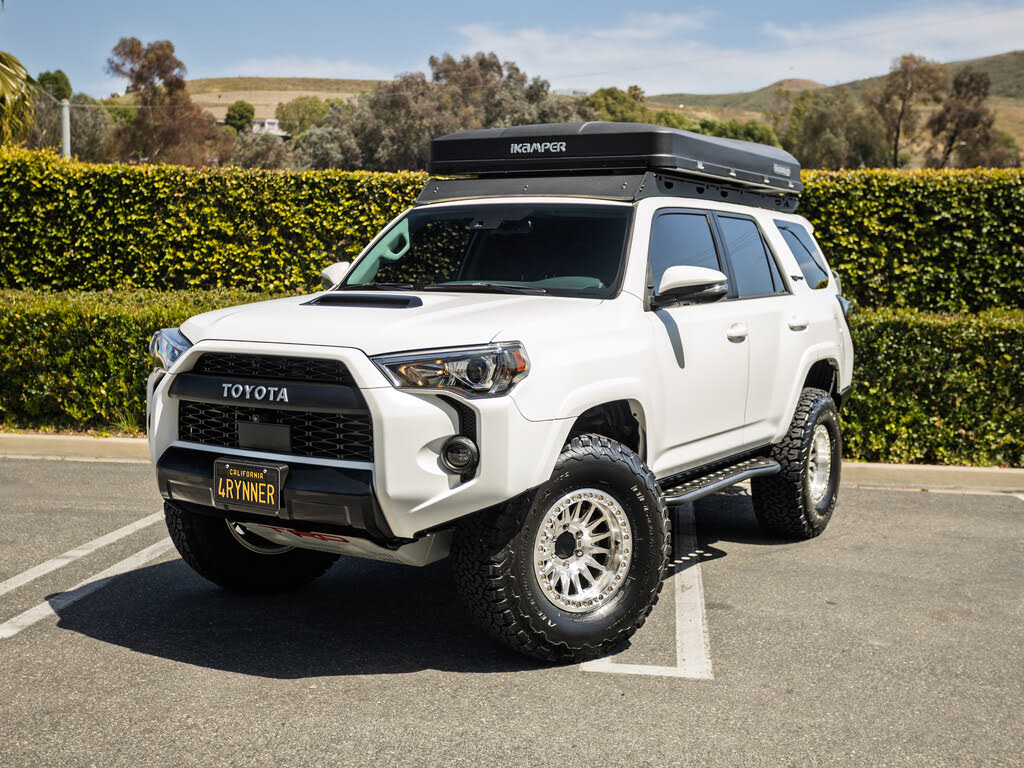
$72,900
2024 TRD PRO · White
4,629 mi · San Juan Capistrano, CA
View listing →

$55,990
2022 TRD PRO · White
23,243 mi · Birmingham, AL
View listing →

$44,990
2019 SR5 Premium · Black
27,371 mi · Indianapolis, IN
View listing →
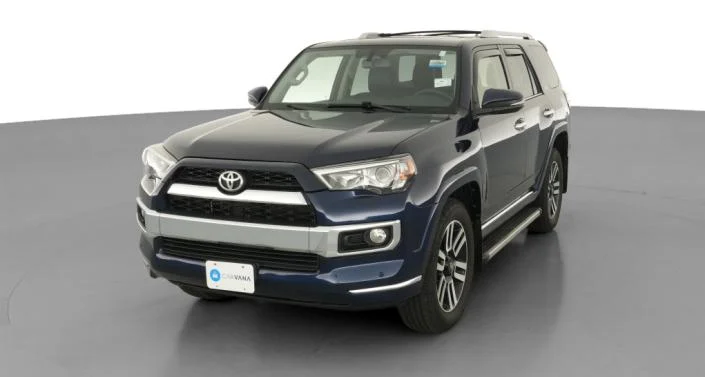
$36,590
2017 TRD PRO · Blue
41,005 mi · Oklahoma City, OK
View listing →

$28,590
2015 Limited · Black
71,639 mi · Richmond, VA
View listing →
Live dealer listings, refreshed periodically. Prices and availability change.
The 2020 4Runner is our best all-around pick in the current dataset. Its median asking price is $34,455, about $2,941 more than the 2019, while average mileage is roughly 8,321 miles lower. It is a late, well-sorted fifth-generation truck with the proven 4.0-liter V6, and it comes before the all-new 2025 turbo-and-hybrid redesign. That does not make every 2020 better than every 2019 or 2021: drivetrain, trim, mileage, condition, and local price should decide between two specific trucks. Compare at least three configuration-matched examples and negotiate from the cleanest one, not the national median.
Start with a 2016 SR5. Its current median ask is $24,424, about $2,327 more than the 2015, and it gives you the fifth-generation 4.0-liter V6 and body-on-frame platform without near-new pricing. The tradeoff is mileage: these listings average 128,055 miles. At this age, buy the best-documented truck rather than the cheapest one. Confirm maintenance history, inspect the frame and underbody for corrosion, look for towing and off-road wear, and pay for an independent pre-purchase inspection. Keep part of the budget for age-related service instead of spending every dollar on the purchase itself.
It can be, but they answer different questions. The 2025 opens the all-new sixth generation on the TNGA-F platform, trading the 4.0-liter V6 for a turbocharged 2.4-liter i-FORCE four-cylinder and an available i-FORCE MAX hybrid with substantially more torque. A used fifth-generation truck gives you a deeply proven powertrain and a long resale track record at a lower price. If you want the newest technology, efficiency, and full warranty, the 2025 makes sense; if you want maximum certainty and value, a clean late fifth-generation truck is hard to beat. Compare out-the-door prices, warranty start dates, and your real use before deciding.
In our fitted five-year curves, the 4Runner's retention is strong relative to both Jeep peers, which is a big part of its reputation. Our data shows the 4Runner losing about 27.5 percentage points less than the Grand Cherokee over five years. The Wrangler gives up roughly 12.4 more points over the same horizon, notable because the Wrangler is itself known for defending its value. Retention still is not a reason to overpay: match configuration, mileage, and condition, then let the price you negotiate drive the decision.
29.8% of 4Runners in our listing sample already have more than 100,000 miles, and about 8.8% have crossed 150,000, with high-mileage examples asking a median around $23,595. That active high-mileage market reflects the truck's durability reputation, but it is not a guarantee that any individual example has remaining life. A high-mileage 4Runner can make sense when the service history is complete, wear items are priced into the deal, the frame and underbody are sound, and an independent inspection is clean. Ask the inspector to separate normal wear from deferred repairs and to flag hard towing or off-road use, because deferred maintenance can erase the purchase-price savings quickly.
Our mileage-adjusted fitted curve estimates that a Toyota 4Runner loses about 17.8% of its original value after five years, retaining roughly 82.2%, which is unusually strong for the segment. That is based on 2,554 listings across multiple model years, with asking prices adjusted toward an estimated sale price. It is a nameplate-level trajectory, not a quote for a specific VIN. Your purchase price, drivetrain, trim, mileage, condition, prior use, and the new-vehicle market at resale can move the result materially. For a real purchase, calculate the dollar loss from the price you negotiate on a configuration-matched truck, not from an abstract national MSRP.
Build a configuration sheet before comparing prices. Record model year, generation and powertrain, two- or four-wheel drive, trim, any TRD or off-road packages, major options, mileage, accident and owner history, tires, and any modifications. Then obtain the window sticker or build data and compare each asking price with similarly equipped trucks, not the nameplate median. Keep TRD Pro and heavily modified rigs out of the pricing pool for an ordinary SR5. Finally, inspect the frame, underbody, hitch, suspension, and tire wear, and convert immediate needs into dollars. If one truck lacks the drivetrain or capability your use requires, it is not cheaper in any meaningful sense, and missing build data is itself a sound reason to keep shopping.
Depreciation is computed from 1,925 real used-car listings. Each listing's asking price is normalized to a standard 12,000 miles per year for the vehicle's age, adjusted by a 5% asking-to-sale estimate, and compared against the original base MSRP for that VIN's trim. Headline 1/3/5-year figures reflect a smoothed retention curve fitted across all model years (the typical trajectory); individual years in the table above can run above or below it with market conditions. Full methodology. Updated August 2026.